Draft Survey: Barge Overhang Method

ss (49)

I found this alternative method from draft survey course book, hope it usable. Frankly, I never use this method yet, as we required the barge owners to provide the hydrostatic table for draft survey.

The overhang method use the same principles with the method of calculating the volume of a prism. The weight of the barge will be getting by multiplying the volume with the water density where the barge is afloat. Measure the dimension of the barge, before and after the loading/discharging is required for the length and width of the barge, barge freeboard, overhang aft and fore.

The method is applied when :
– The barge is of cut-up type.
– There is no table or data.
– The concerned parties agree on the use of overhang method for weight determination of barges.

Continue reading “Draft Survey: Barge Overhang Method”

Draft Survey Software Review

A few weeks ago, I have got the full version of Draft Survey Software, thanks to Capt. Michael from MW Marine Services, LLC that has given me free.

Now, I have time to post the review of Draft Survey software, so the reader could give comment and feedback to software owner for next expansion. This review is based on the software I have tested. Just continue reading to check the below test.

The below screenshot show how the software works:
Fig. 1 – Data to insert for Draft Survey
marine cargo ship surveyors
In this page you should insert the ship particulars and survey data to get access to the next page.

Continue reading “Draft Survey Software Review”

Draft Survey Software

marine cargo ship surveyors

I have tried to complete the sevensurveyor project and developed one simple software for draft survey calculation named 7S DraftSurvey.

This software is made for automatic draft survey calculation such as; quartermean draft, trim, fore and aft draft corrections, Displacement, TPC, LCF, MTC, 1st & 2nd trim corrections, density correction, and deductibles. The software could be used to determine the total cargo loading/unloading on the shipboard.

It is very simple and helpful to cut down the time for draft survey calculation. What you have to do is just inserting some data in the initial draft survey and get easy calculating for any intermediate and final draft survey with insert the reading draft, density, and sum of deductibles only. This software designed to handle the ship with reading draft marks up to 27.00 Meters.

Continue reading “Draft Survey Software”

Software for Marine Cargo Surveyor

marine cargo ship surveyors

Just go to this link for downloading: http://sevensurveyor.com/software/. The list of software will be growing, I will load additional software when available.

Just leaving your comment about Software for Marine Cargo Surveyor.

Regards,

Surveyors / 65GTW3KC3KQP

PS: If you need the complete calculation software you could search on the web, it is available to buy online. For the ASTM Table complete version, you could check at this link http://www.astm.org/BOOKSTORE/ADJUNCT/ADJD125010.htm

Draft Survey: The Accuracy and Factors Effecting

Sometimes the accuracy of Draft Survey is a big question, especially when the cargo loaded or discharged from the vessel shown extremely different weight with the references Weight Scale or Counter Weight. Unfortunately, the parties concerns would be doubt on to the weight resulted by Draft Survey, as they have been relying upon the mentioned scales for many years.

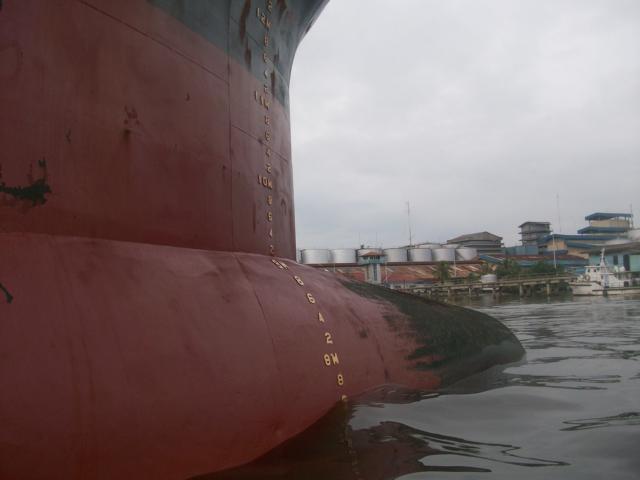
Draftmark

Draught Survey UN ECE: Code of Uniform Standards and Procedures

UN ECE was published the Factors Affecting Draft Survey as follows :

1- Incorrect hydrostatic information or draft marks: Investigations carried out in specially performed draft surveys have indicated that there can be significant errors in the determination of displacement due to typographical errors or arithmetical errors in the ship’s hydrostatic tables. This could be improved if the tables furnished to the surveyor bore an approval stamp by the flag government or the classification society. A number of years careless re-painting of draftmarks, especially if they have not been permanently marked on the hull, can cause erroneous readings. If there is any doubt, the draft marks should be re-sited at the next dry-docking.

Continue reading “Draft Survey: The Accuracy and Factors Effecting”

Draft Survey: Specimen of Calculation

As I have promised you, I write down this post to explain specimen of Calculation in Draft Survey. Please also refer to the previous post Draft Survey : Procedures and Calculation.

Ok, now we could directly go to the point. The vessel has alongside at the wharf in port to discharge the grain cargo. The Ship’s Particulars shown :

Name of Vessel : MV. OCEAN BALL, – Port of Registry (POR) : Panama, – Lenght Over All (LOA) : 182.00 M, – Lenght Between Perpendiculars (LBP) : 179.00 M, – Breath (B) : 32.20 M, – Depth (D) : 17.15 M, – Gross Tonnage (GT) : 28,342 MT, – Net Tonnage (NT) : 17,664 MT, – Summer Draft (SD) : 12.163 M, – Summer Deadweight (DWT) : 52,998 MT, – Light Ship (LS) : 7,780 MT, Constant (CS) : 320 MT, – Fore Distance to Perpendicular (Fd) : 1.70 M, – After Distance to Perpendicular (Ad) : 9.45 M.  See Picture :

marine cargo ship surveyors

The Surveyor came onboard and made Draft Survey to determine the quantity of cargo on arrival. During inspection, she’s draft marks and others data finds as the followings :
– Fore Draft Port (FP) : 10.79 M / Fore Draft Starboard (FS) : 10.81 M.
– Mid Draft Port (MP) : 10.90 M / Mid Draft Starboard (MS) : 11.03 M.
– Aft Draft Port (AP) : 11.16 M / Aft Draft Starboard (AF) : 11.19 M.
– Density of Sea Water Sample (Den) : 1.021.
– Ballast Water (BW) : 265.00 Cubic Meter at Density 1.025, – Fresh Water (FW) : 183.00 MT.
– Fuel Oil (FO) :  612.00 MT, – Diesel Oil (DO) : 161.00 MT, – Lub Oil (LO) : 29.00 MT.
Continue reading “Draft Survey: Specimen of Calculation”

Draft Survey: Procedures and Calculation

surveyormates
marine cargo ship surveyors

The Draft Survey procedures and calculation ascertained as the following series :

  1. Reading the draftmark of the ship, which consist of six (6) points of draftmarks, i.e.; Fore, Midship, and After at both sides of the ship,
  2. Sampling and testing the sea water or dock water density at the place where the vessel floats,
  3. Determining of deductible weights by measuring and sounding of ballast tanks, fuel oil, fresh water that existing onboard at the time of survey,
  4. Using Hydrostatic Table provided onboard to calculation.

Continue reading “Draft Survey: Procedures and Calculation”